Peer-reviewed · E. coli
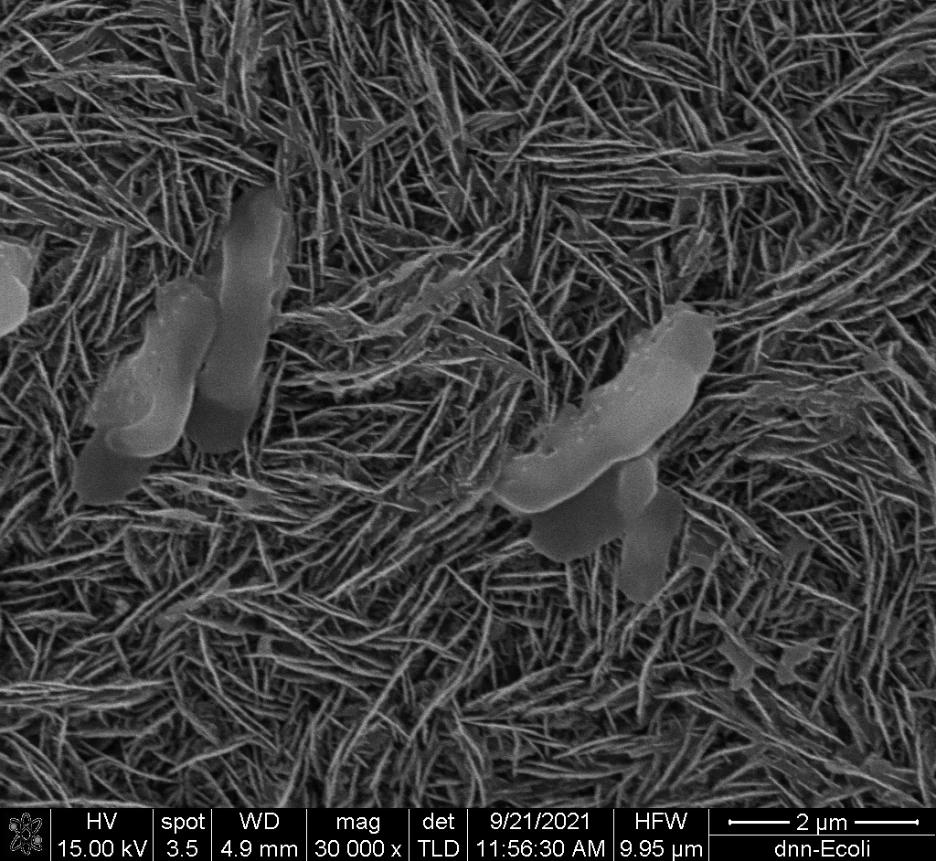
Physical cell disruption observed by SEM
E. coli cells on the diamond nanospike surface are severely disrupted, consistent with a mechanical “ripping” model.
Open study →
Evidence
Addrix has peer-reviewed laboratory evidence against E. coli, qualitative long-duration observations, SEM evidence of cell disruption and a Tetrivex-owned intellectual property foundation. Addrix is adding application-specific validation on top of that foundation.
E. coli cells on the diamond nanospike surface are severely disrupted, consistent with a mechanical “ripping” model.
Open study →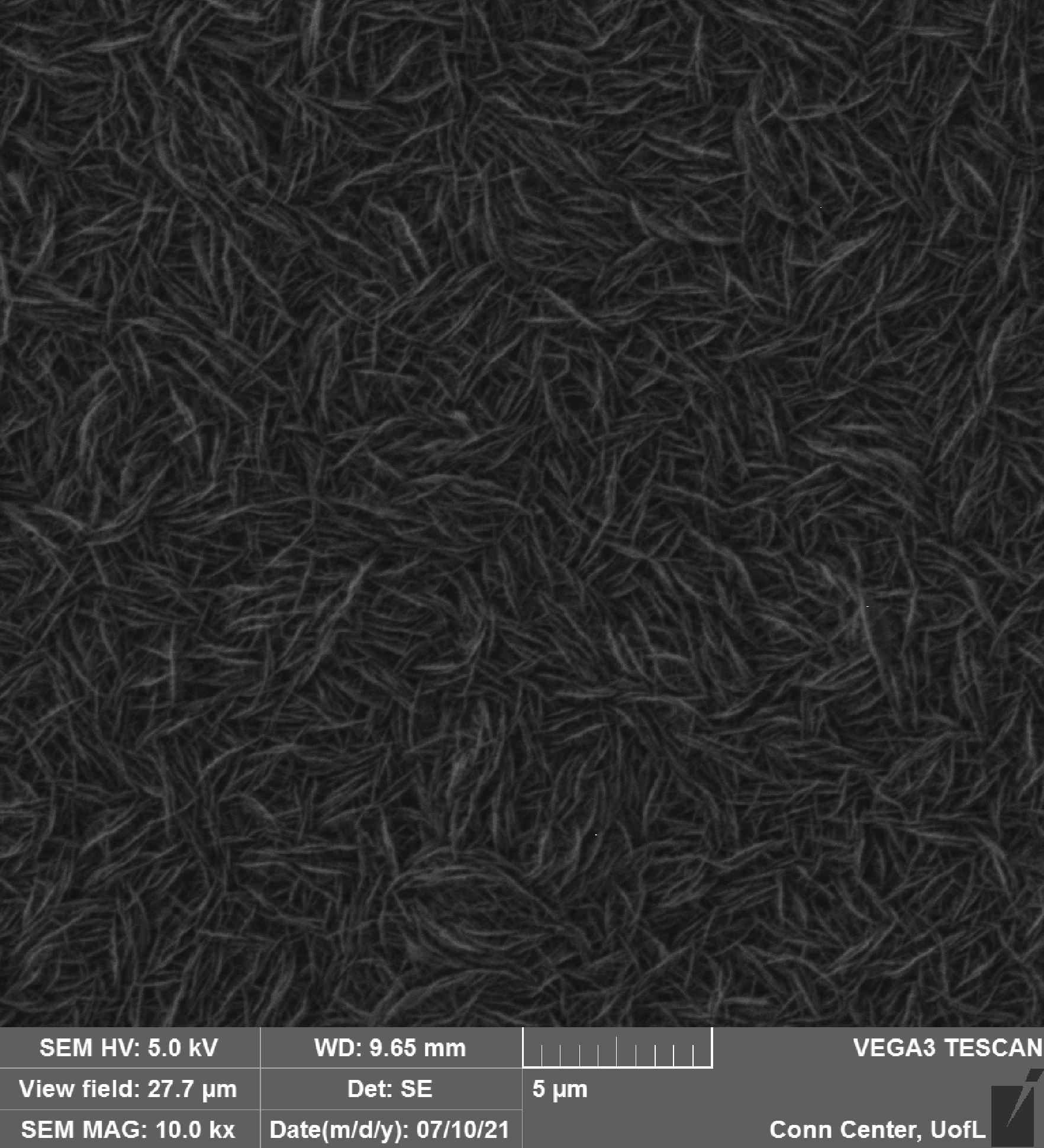
In quantitative testing, silicon and non-nanostructured polycrystalline diamond showed pronounced E. coli growth, supporting the role of nanospike topography in the observed antibacterial behavior.
Review methods & Figure 3 →What the study supports
The published study reports measurable antibacterial behavior and direct SEM evidence of cell disruption under defined laboratory conditions. Results are presented in the context of the tested surfaces, organisms and methods.
Intellectual property
Tetrivex Materials owns and controls intellectual property associated with the Addrix nanostructured surface technology and manages the rights used in commercial development and licensing.
Technical details and application-specific licensing terms are shared with qualified partners through the appropriate evaluation and confidentiality process.
Discuss a partnershipAdditional validation
Addrix has demonstrated laboratory performance against E. coli. Tetrivex Materials is pursuing additional independent testing across representative substrates, organisms, cleaning protocols and mechanical-use conditions to support application-specific antibacterial and broader antimicrobial claims.
Validation roadmap
Each commercial field of use is open to exclusive rights upon entering a partnership to demonstrate the following:
Confirm deposition, adhesion, morphology and repeatability on the actual OEM material system.
Test wiping, cleaning agents, abrasion, impact and other mechanical conditions relevant to the component.
Expand organism panels and use defined methods appropriate to the intended antibacterial or antimicrobial claim.
Match public claims to the final data package and market-specific regulatory requirements.
Source
Public performance claims presented here are grounded in the peer-reviewed study below.
Application development
Start with the component, substrate, use conditions and validation need.